Roque de las Bodegas is Anaga's beach of black sand and grilled fish — a wild, dramatic strand tucked below the towering green mountains of the peninsula, where the Atlantic thunders in and a cluster of famous seafood restaurants line the road behind. It sits on the same spectacular coast as neighbouring Playa de Benijo, part of the remote, roadless-feeling northeastern tip of Tenerife. Come for the raw scenery and the surf, stay for a long lunch of fresh fish with your feet almost in the sand.
How to get there
Roque de las Bodegas lies on the coast of the Anaga Rural Park, near the village of Taganana, reached by the winding TF-134 that drops from La Laguna through ancient laurel forest to the sea. It's a slow, beautiful, twisting drive that rewards patience and a steady hand on the wheel. There's roadside parking near the beach and the restaurants, though it's tight at busy times — arrive early on weekends. This is the kind of place where the journey through the mountains is half the pleasure.
Time your trip around a leisurely seafood lunch. The restaurants here are a genuine destination in their own right — book or arrive early on Sundays, when locals pour in from across the island.
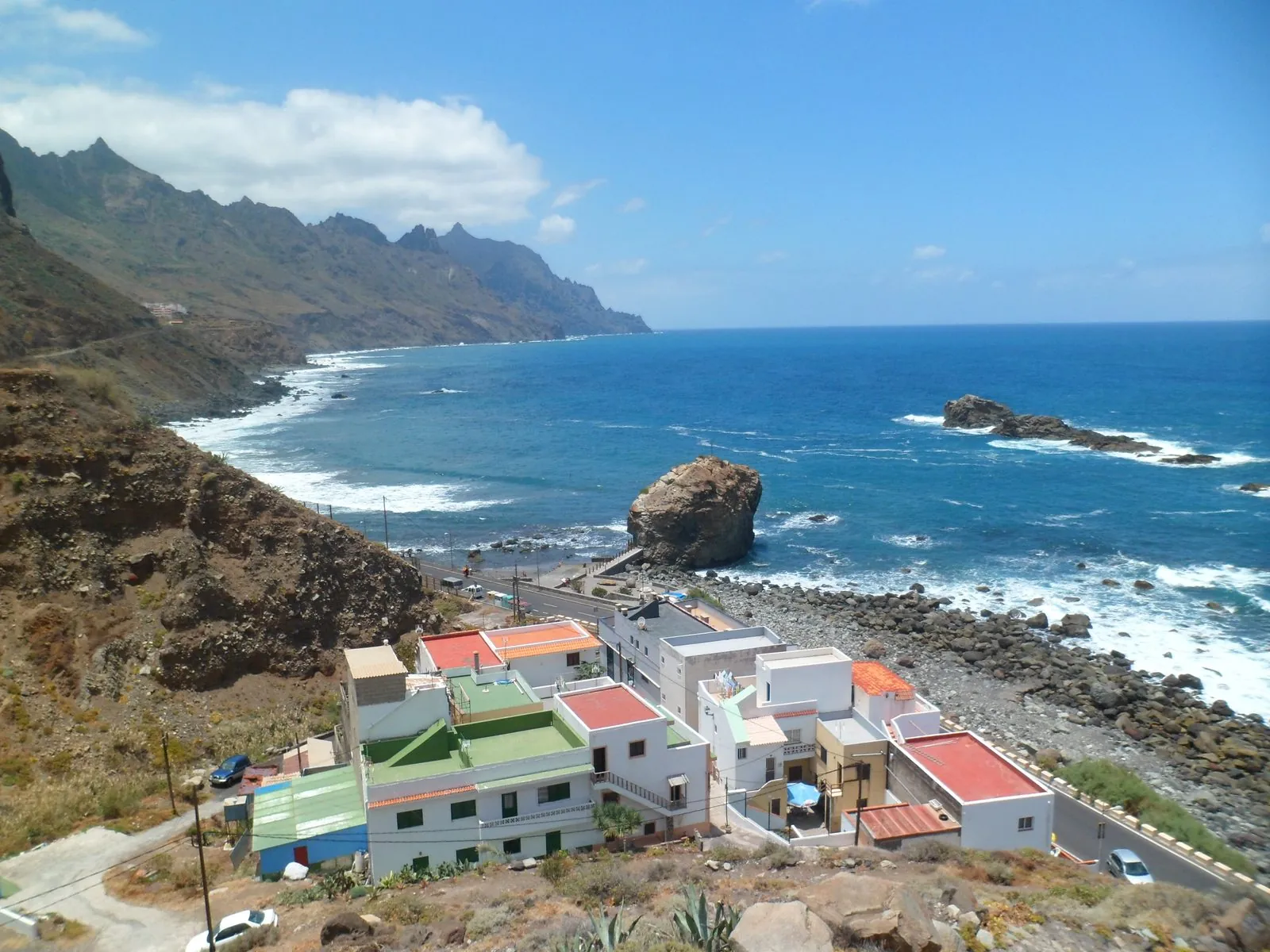
Photo: Beneharo Hdez. · CC BY-SA 3.0 · Wikimedia Commons · scaled
What it's like
This is elemental Anaga. The beach is a broad stretch of coarse black volcanic sand and rock, hemmed in by steep, green mountain walls that plunge almost straight into the sea, with dramatic rocky islets offshore. The Atlantic rolls in powerfully, and the whole setting feels wild and untamed. Behind the sand, the low-key seafood restaurants give the spot a warm, sociable buzz — a rare pocket of comfort in an otherwise raw and remote landscape.
Mountains at your back, black sand underfoot and a plate of fresh-grilled fish — Roque de las Bodegas is Anaga distilled.
Swimming and safety
The sea here is powerful and deserves real caution. Facing the open Atlantic with no shelter, Roque de las Bodegas often has strong surf, shore break and currents, and lifeguard cover is limited or absent. Surfers know and respect the waves, but for casual bathers the water is frequently unsafe, and conditions can change quickly. Treat a calm-looking moment with scepticism, and never assume it's safe just because the sand looks inviting.
The water can be dangerous. Strong Atlantic surf and currents, plus little or no lifeguard cover, make this a beach for experienced surfers rather than casual swimmers. Keep children well back from the shore break, don't swim alone, and if the sea is big, enjoy it from the sand. For sheltered swimming, look to a south-coast beach.
Surfing
The waves that make swimming risky make Roque de las Bodegas a well-known surf spot, drawing experienced riders to this wild stretch of Anaga coast. Even if you don't surf, watching from the beach as the sets roll in beneath the mountains is a fine spectacle. It's a serious wave for confident surfers, not a beginners' beach.
Facilities
Beyond the restaurants, keep expectations modest. The star turn here is the row of rustic seafood eateries serving fresh fish, papas arrugadas and mojo and local wine — a real highlight. Otherwise this is a natural beach with little shade and minimal beach services, so bring water, sun cover and everything else you'll need. The lack of development is part of its wild charm.
Best for whom
Roque de las Bodegas is for lovers of dramatic scenery, good seafood and experienced surfers — anyone drawn to wild coast over comfort and calm swimming. It rewards travellers happy with a long mountain drive and a rough-and-ready beach that comes with a great lunch. It is not for families wanting safe paddling, anyone needing easy access, or those after a fully serviced resort beach.
Nearby
The surrounding Anaga Rural Park is a walker's dream of misty laurel forest, ridge trails and tiny hamlets, and the nearby village of Taganana is worth a look. Just along the coast, the equally wild Playa de Benijo and Almáciga share the same black-sand character. To plan the wider island and how to reach the north, see our full guide to Tenerife.