Puerto Naos is La Palma's biggest black-sand beach and the sunniest corner of the island — a broad, palm-lined stretch on the warm western coast. Backed by a low-rise resort of hotels, apartments and seafront cafés, this generous curve of dark volcanic sand has long been the island's main beach holiday base, blessed with reliable sunshine and calmer water than much of La Palma's rugged shore. It's the closest thing the "Isla Bonita" has to a classic sun-and-sand resort beach.
Check current access before you go. Puerto Naos sits close to the area reshaped by La Palma's 2021 Tajogaite (Cumbre Vieja) eruption, and access to parts of the resort and beach has been affected by post-eruption conditions such as volcanic gas monitoring. The island is fully open to visitors, but the situation around Puerto Naos has changed over time — check the latest official guidance and local information before planning your day there.
How to get there
Puerto Naos lies on the west coast below the Aridane valley, a short drive down from the town of Los Llanos de Aridane. A hire car is the easiest way to reach it, following the road down through banana plantations to the coast, though bus services also connect the valley towns. The western side of the island is the sunniest and driest, which is exactly why this resort grew up here. As noted above, confirm current access arrangements before setting out, as these have varied since the eruption.
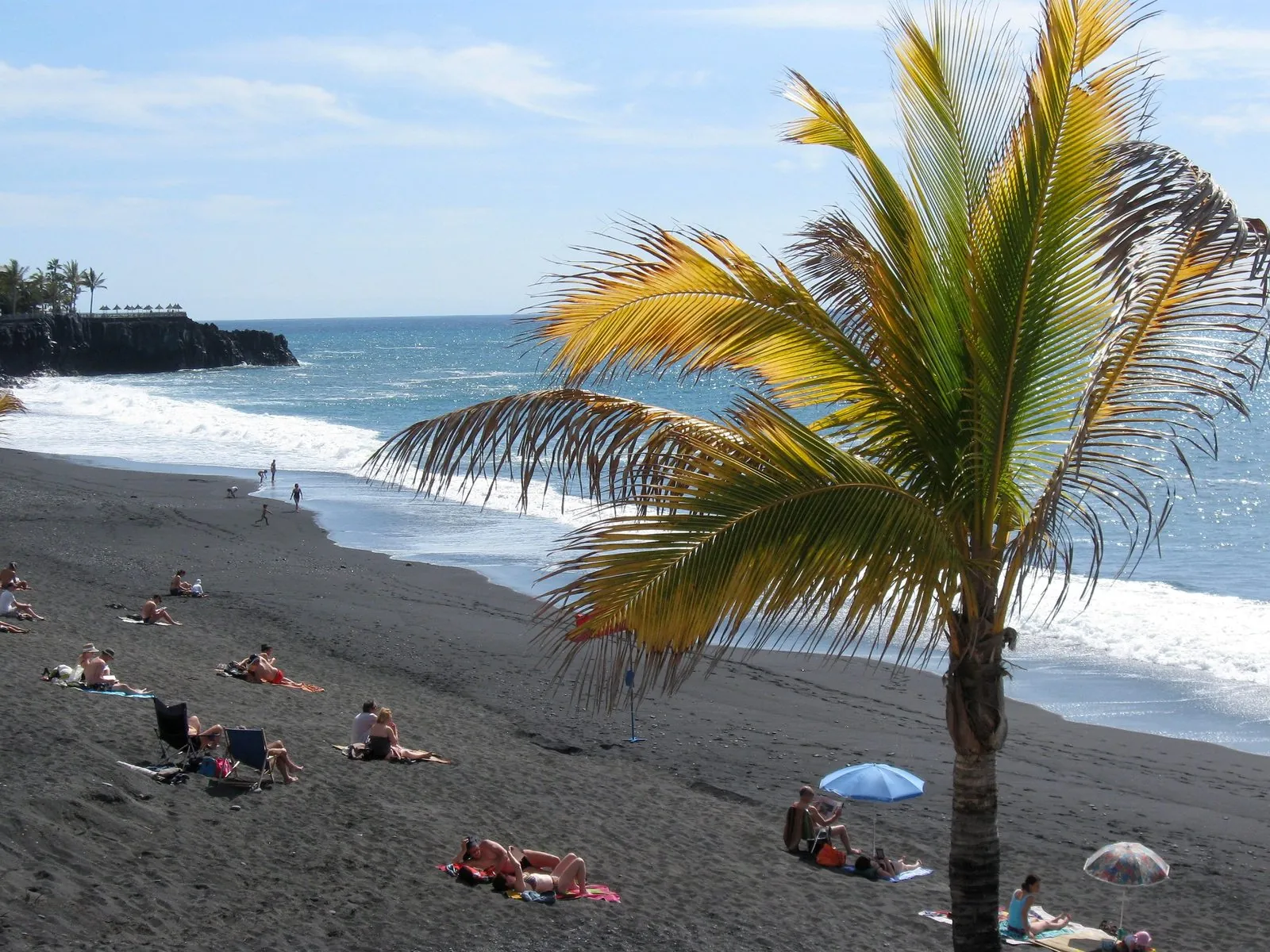
Photo: Rufus46 · CC BY-SA 3.0 · Wikimedia Commons · scaled
What it's like
Puerto Naos is a wide, open beach of deep black volcanic sand, striking against the blue Atlantic and the green hills behind. A pleasant palm-lined promenade runs along the front, backed by hotels, apartments and places to eat, giving it a relaxed, low-rise resort feel quite unlike the wilder beaches elsewhere on the island. It has flown the Blue Flag for its quality and facilities, and its broad sands and sunny aspect made it a firm favourite for a proper beach holiday on an island better known for hiking and stargazing.
Swimming and safety
By La Palma standards the water here is relatively calm and swimmable, which is a big part of the beach's appeal on an island whose coast is largely steep and surf-battered. The dark sand shelves into clear Atlantic water, and in settled conditions it's a pleasant place to swim. As always on an open ocean beach, respect the sea, watch for swell and currents, follow any flag system and lifeguard guidance when the beach is supervised, and keep an eye on children in the water.
Facilities
As the island's main resort beach, Puerto Naos has traditionally offered a full range of facilities — a promenade of cafés, bars and restaurants, sunbeds and parasols, showers, toilets and easy access. Because current conditions around the resort have shifted since the eruption, the exact services available may vary, so it's wise to check locally what's open before you arrive. Bring water and sun protection regardless; the west coast is warm and sunny, and shade on the open sand is limited.
Best for whom
Puerto Naos suits travellers who want a genuine beach base on La Palma — sunseekers, couples and families drawn to the island's dramatic scenery who also want reliable sun and swimmable water. It's the natural choice for combining beach time with exploring the west of the island. Given the post-eruption situation, it best suits flexible visitors happy to check conditions in advance; those wanting guaranteed, unchanged resort infrastructure may prefer to confirm the current picture first or look at alternatives nearby.
Nearby
Puerto Naos is the coastal end of the fertile Aridane valley, whose main town, Los Llanos de Aridane, is a lively place with galleries, murals and restaurants a short drive up the hill. The wider west coast offers more black-sand beaches and natural bathing spots, while inland the great crater of the Caldera de Taburiente and the island's world-class dark skies await. To plan your visit to the greenest, most volcanic of the islands — and to check what's currently open — see our full guide to La Palma.