Playa de Nogales is one of La Palma's most dramatic beaches — a wild sweep of black volcanic sand and pebbles at the foot of towering green cliffs on the island's east coast. Reached by a steep path down the barranco, it rewards the effort with raw, elemental scenery and a real sense of being far from the tourist trail. This is nature at its most powerful, and a fine example of why La Palma is known as "the beautiful island". Come for the setting — but treat the sea with great respect.
This is a dangerous beach for swimming. Playa de Nogales is exposed to the open Atlantic, with big surf, powerful waves and strong currents. There are no lifeguards. Every year people underestimate it. Enjoy the scenery, paddle only in the shallowest edge on calm days if at all, and keep well back from the water when the swell is up.
How to get there
Playa de Nogales lies on the east coast of La Palma, below the town of Puntallana, north of the capital. You drive to a small clifftop parking area, from where a steep, unpaved footpath zigzags down the ravine to the beach. The descent takes roughly 15–20 minutes and the climb back up is genuinely strenuous, so you need sturdy footwear and a reasonable level of fitness. There's no vehicle access to the sand and no public transport to the trailhead, so a hire car is the practical way to reach it.
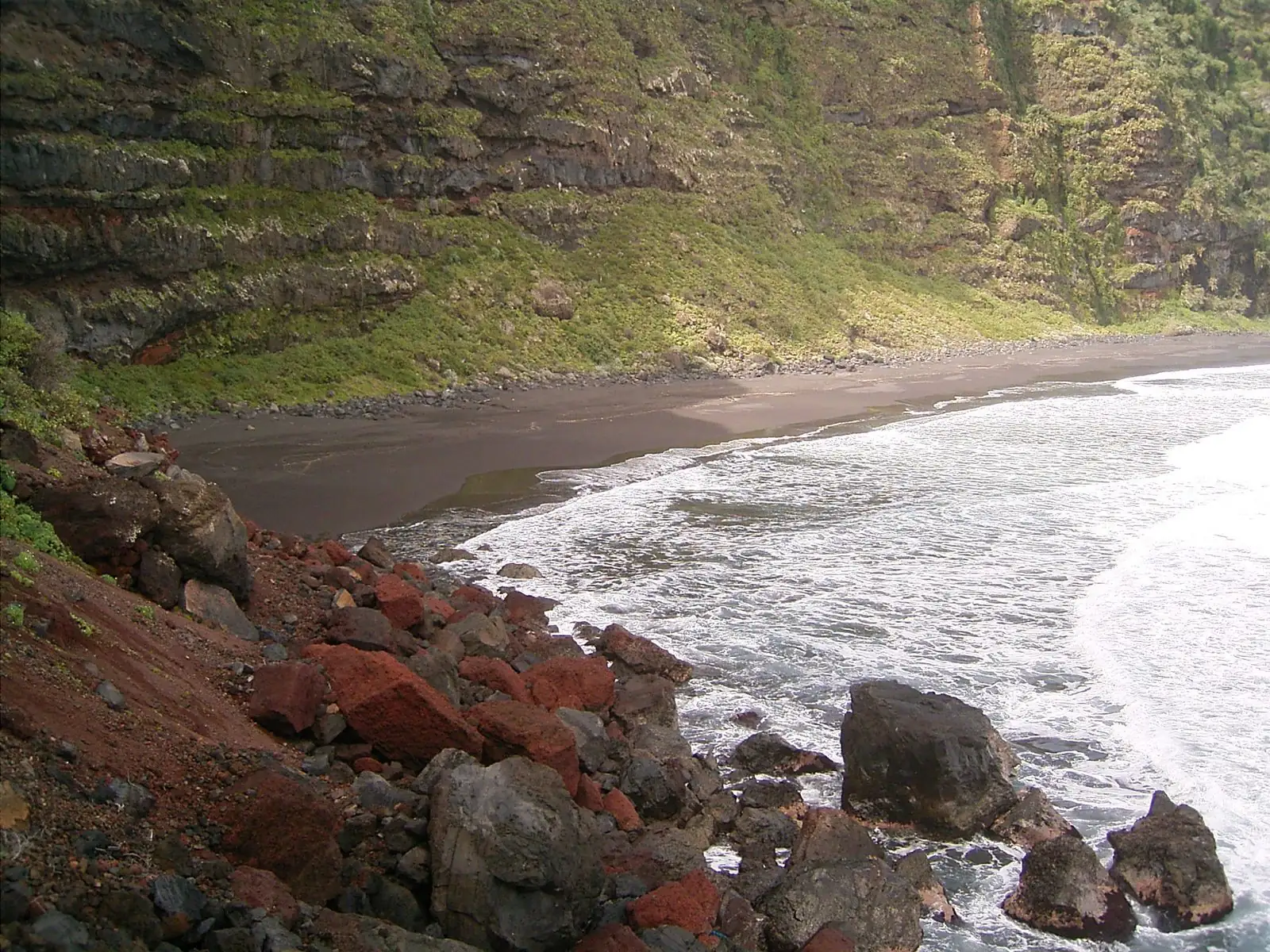
Photo: Frank Vincentz · CC BY-SA 3.0 · Wikimedia Commons · scaled
What it's like
The beach is a long, striking band of dark grey and black sand and pebbles, hemmed in by soaring, vegetation-draped cliffs that plunge straight to the shore. It's one of the largest natural beaches on the island and feels wonderfully wild and untamed, with the Atlantic rolling in and few people around. Surfers and bodyboarders are drawn by the waves, and the sheer scale of the cliffs and sky makes it a magnificent place simply to sit and take it all in. This is scenery over comfort, every time.
Go in the morning. The east-facing beach gets the best light early, the cliffs throw much of the sand into shade by the afternoon, and you'll want the cooler hours for the stiff climb back up.
Swimming and safety
Swimming here is genuinely hazardous and not recommended for most visitors. The beach faces the open ocean with no shelter, so waves are frequently large and currents strong, and there are no lifeguards, flags or rescue services. Experienced surfers know the risks; ordinary swimmers should not go in beyond a cautious paddle, and only on the calmest days. If the sea is at all rough, stay out of the water entirely and enjoy the beach from the sand. Never turn your back on the waves.
Facilities
There are no facilities at all. No sunbeds, no toilets, no kiosk, no shop and no reliable shade — nothing but the beach, the cliffs and the sea. Come fully self-sufficient with plenty of water, food, sun protection and stout shoes for the path, and take every bit of rubbish home with you. The complete absence of development is part of what makes Nogales so special, but it does mean you must plan ahead and look after yourself out here.
Best for whom
Playa de Nogales suits adventurous walkers, photographers and lovers of wild, dramatic scenery, plus experienced surfers who know how to read the Atlantic. It's a superb spot for a memorable half-day if you're reasonably fit and self-reliant. It is emphatically not for families wanting safe, shallow swimming, for anyone with mobility difficulties, or for those who want facilities and easy access. Choose it for the spectacle and the sense of adventure, not for a relaxed bathe.
Nearby
The handsome island capital, Santa Cruz de la Palma, with its cobbled streets, colourful balconied houses and good restaurants, is a short drive south — the natural base for exploring this side of the island. From there you can reach La Palma's lush laurel forests, the vast Caldera de Taburiente and the world-class observatories high on Roque de los Muchachos. For where to stay and the best of the island, see our full guide to La Palma.