Puerto de las Nieves is one of the prettiest corners of Gran Canaria — a whitewashed fishing village tumbling down to the sea on the island's rugged northwest coast, below the little town of Agaete. Blue-and-white boats bob in the harbour, seafront restaurants serve the day's catch, and a beach of smooth black pebbles meets clear Atlantic water. It feels a world away from the big southern resorts: quieter, more Canarian, and genuinely charming.
How to get there
Puerto de las Nieves sits on the coast just below Agaete, in the far northwest of the island. From the capital, Las Palmas, it's a straightforward drive of well under an hour along the north coast motorway, and the village is also served by public buses (guaguas) from the capital and nearby towns. Having your own car makes it far easier to explore the dramatic Agaete valley and the mountains behind, but a day trip by bus is perfectly doable if you'd rather not drive the winding roads.
The village is also a ferry port. Fast catamarans cross from here to Santa Cruz de Tenerife, making Puerto de las Nieves a handy gateway for island-hopping — see our guide to ferries between the islands for how the routes connect. If you're piecing together a longer trip, working out how to get between the islands is worth doing before you book.
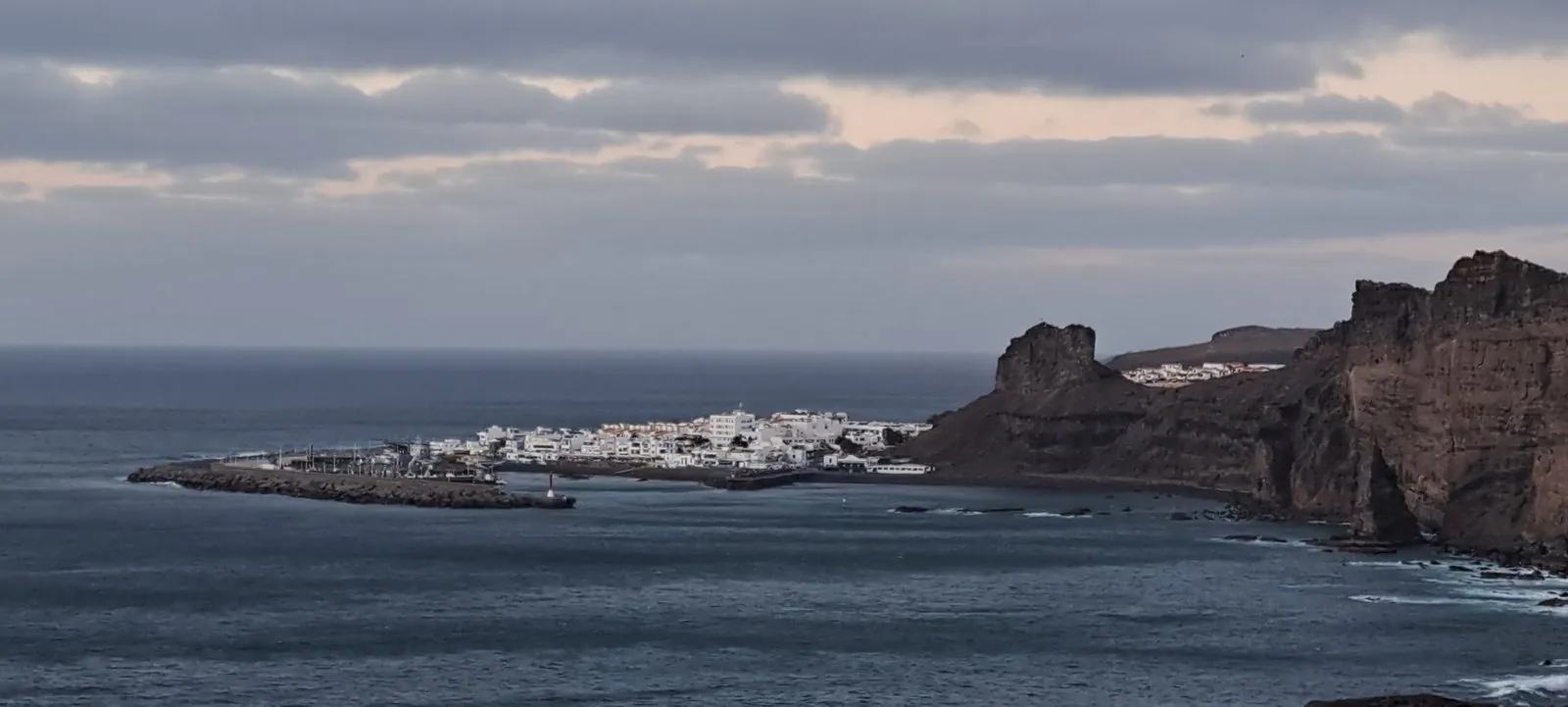
Photo: Desde un tajinaste · CC BY 4.0 · Wikimedia Commons · scaled
What it's like
This is a working village first and a resort second, and that's the appeal. The seafront promenade curves past pastel houses, a small church and a line of restaurants, while fishing boats and the ferry come and go from the harbour. The beach itself is made of dark, sea-smoothed pebbles rather than sand, backed by towering cliffs that glow gold in the late afternoon. The whole place has an unhurried, authentically Canarian feel, busiest with local families at weekends and delightfully calm midweek.
Time your visit for late afternoon, when the cliffs turn amber and the fishing boats drift home to the harbour.
The Dedo de Dios
For generations the village's emblem was the Dedo de Dios ("God's Finger"), a slender sea stack that pointed skyward just off the cliffs. A tropical storm in 2005 snapped off the pinnacle, so the famous finger is no longer there — but the rock base and the sweep of cliffs remain a striking sight, and old photographs around the village show how it once looked.
Swimming and safety
The bay is reasonably sheltered and the water is beautifully clear, but the beach shelves into pebbles rather than soft sand, so water shoes make getting in and out far more comfortable. As with any Atlantic-facing beach, respect the swell: on calmer days swimming is lovely, while a bigger sea can bring a stronger shore break. The real draw for many visitors is the set of natural sea pools along the shore, where volcanic rock traps calm, refreshing seawater — ideal for a safe dip when the open sea is livelier.
Bring water shoes for the pebbles and the rocky pools, and check the sea state before swimming out. On rough days, the sheltered natural pools are the safest and most enjoyable place to bathe.
Facilities
Puerto de las Nieves is best known for its fish restaurants, and rightly so — the seafront is lined with places serving fresh grilled fish, seafood and Canarian classics like papas arrugadas with mojo, often with a harbour view. You'll find cafés, small shops, public toilets and parking, plus the promenade for an easy stroll. It's a compact village, so everything is within walking distance, but it isn't a full-scale resort — don't expect sunbed rows, water sports operators or a strip of bars.
Best for whom
This is a beach for travellers who want character over crowds: food lovers, couples, photographers and anyone keen to see a more traditional side of Gran Canaria. Families enjoy the calm sea pools and relaxed pace, and it makes an excellent lunch stop on a north-coast day out. It's less suited to those set on soft golden sand, lively nightlife or a fully serviced resort beach — for that, the island's south is a better match.
Nearby
The Agaete valley climbs inland from the village into a lush green gorge dotted with coffee and fruit plantations — one of the few places in Europe where coffee is grown — and it's well worth a drive up. The town of Agaete itself has a pretty old centre and a lively annual fiesta, while the wider northwest coast offers some of the island's most dramatic scenery. To plan the rest of your trip, from where to base yourself to the big-name attractions, start with our full guide to Gran Canaria, or read up on the capital at Las Palmas.