Fuerteventura is famous for its beaches, but on foot it reveals a wilder, older self. The oldest and most eroded of the Canaries, it's a wide, low, wind-scoured island of tawny hills, tidy little volcanoes, sweeping dunes and lonely coastlines. The walking is rarely steep, but it is big-sky, open-country stuff with almost no shade and a constant Atlantic wind — beautifully empty, and best tackled with plenty of water and an early start. If you like space and solitude, few Canary islands give you more of it.
This is the island detail behind our wider guide to hiking in the Canary Islands. Here are Fuerteventura's best walks, from a perfect little volcano to the mountains of the deep south.
Calderón Hondo and the little volcanoes
The island's most popular walk climbs Calderón Hondo, a beautifully preserved small volcano near the village of Lajares in the north. It's a short, easy stroll across the plain to the crater rim, where you can peer down into a deep, near-perfect bowl and look out over a whole field of cinder cones towards Corralejo and the sea. Cheeky ground squirrels often greet walkers at the top. Longer loops link several of these northern volcanoes together for a fuller morning.
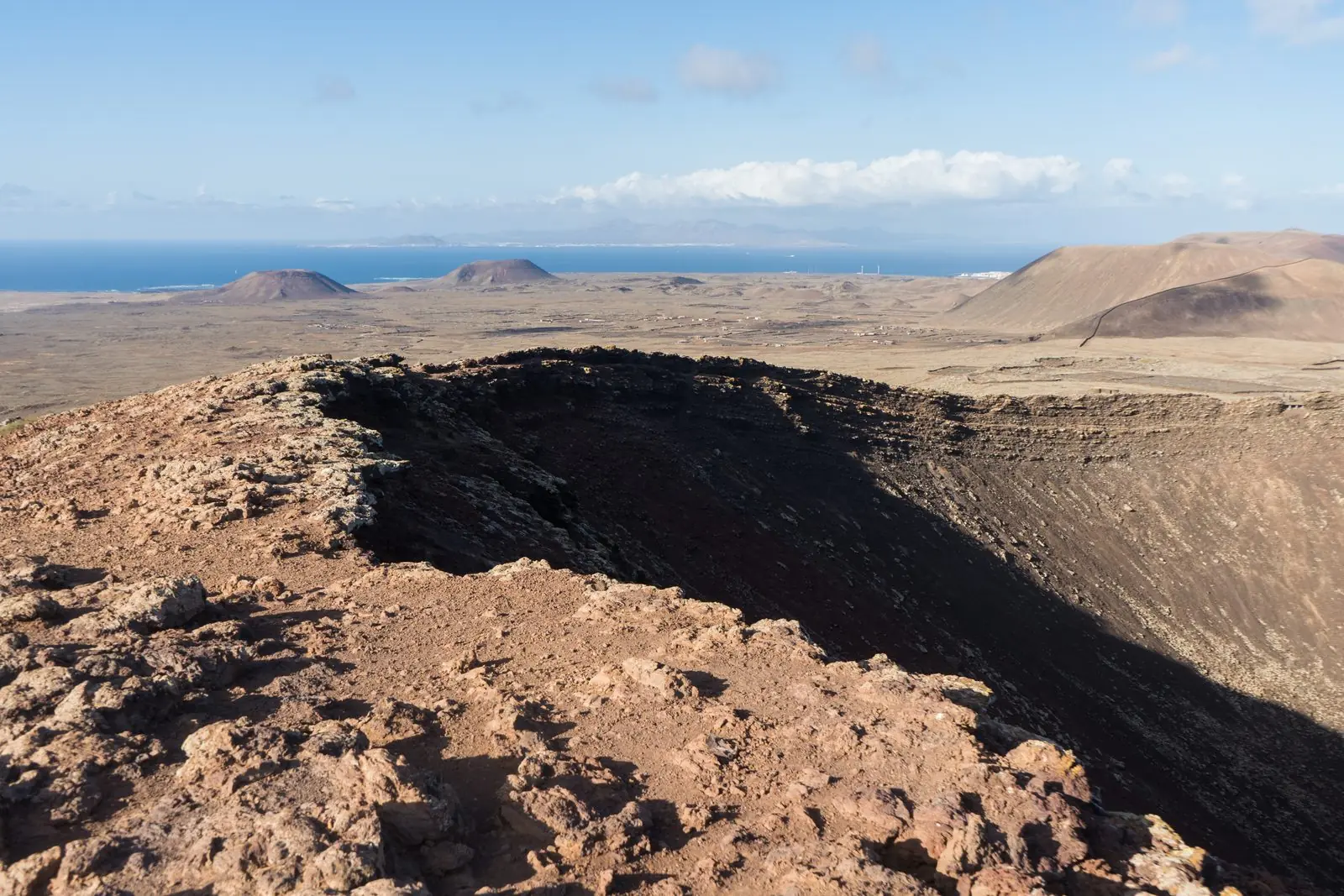
Photo: Alexey Komarov · CC BY-SA 4.0 · Wikimedia Commons · scaled
Montaña Tindaya
Rising alone from the western plain, Montaña Tindaya is the island's sacred mountain — a pyramid of pale rock revered by the aboriginal Majos, whose mysterious foot-shaped carvings (podomorphs) are cut into its slopes. Out of respect and for conservation, access to the actual summit is restricted, but walking the tracks around its base, with the mountain glowing at dawn or dusk, is an atmospheric experience and a window into the island's ancient past.
The Betancuria hills
The green-ish, rumpled heart of the island around Betancuria — the old capital — offers Fuerteventura's most varied inland walking. Trails climb the eroded volcanic massif between whitewashed villages and viewpoints like the Mirador Morro Velosa, with sweeping panoramas over the island's spine. It's cooler and less barren than the coast, and the historic town makes a lovely base or lunch stop.
The Betancuria area is easiest by hire car, and the winding road over the massif is a scenic drive in its own right — pair a short hill walk with a wander round the old capital.
Coastal and dune walks
Some of the finest easy walking follows the coast. In the north you can stroll for miles through the great shifting dunes of the Corralejo dunes — a mini Sahara backed by turquoise sea — while the wild west coast around Ajuy has dramatic cliff paths, black beaches and old lime kilns. These are flat and simple, but exposed to sun and wind, so the usual precautions apply even for a "beach walk".
Jandía and the deep south
The mountainous Jandía peninsula in the far south holds the island's highest ground, the Pico de la Zarza. The long, steady climb to its summit — walked out and back from near Morro Jable — is Fuerteventura's most rewarding hard walk, ending at a giddy viewpoint high above the remote, cliff-backed Cofete beach far below. It's long and utterly exposed, so treat it seriously.
Because Cofete is so hard to reach by road, walkers who make the effort often have that vast, wild beach almost to themselves — one of the great rewards of hiking the south. Just remember that the same remoteness that makes it special also means no shade, no water and no easy escape if you tire, so the Jandía climb is one to respect.
Guided or self-guided?
Fuerteventura's open terrain makes navigation easy, so most walks — Calderón Hondo, the dune and coastal routes, the Betancuria hills — are comfortably self-guided with a map or app. There's little chance of getting lost in the way you might in a forest. A guide can add real value on the longer Jandía routes for the logistics and safety cover, and for the aboriginal history around Tindaya, but for most visitors the priorities here are sun protection, water and an early start rather than a guide.
Difficulty and when to go
| Route / area | Difficulty | Best for |
|---|---|---|
| Corralejo dune walks | Easy | Flat sand-and-sea strolls |
| Calderón Hondo crater | Easy | The classic little-volcano walk |
| Montaña Tindaya base tracks | Easy–moderate | Sacred mountain and history |
| Betancuria hills | Moderate | Inland viewpoints and villages |
| Pico de la Zarza (Jandía) | Hard | Long summit climb, huge views |
Fuerteventura is warm, dry and windy year-round; being low and flat, it has no cool highland refuge, so the summer heat is fierce on the exposed trails. Winter and spring are the pleasantest walking seasons. The wind is a near-constant companion — sometimes welcome, sometimes wearing. See our best time to visit guide for more.
The two great hazards here are sun and wind — there is virtually no shade anywhere on the island. Walk in the cooler hours, carry far more water than you expect to drink, and wear a hat, sunglasses and high-factor sun cream. The wind can be strong enough to unbalance you on exposed ridges and clifftops, so keep well back from edges. Proper footwear matters on loose volcanic ground; tell someone your route and check the forecast.
Wide, wild and wonderfully quiet, Fuerteventura is a walker's island for those who love open space. Go prepared, respect the sun and wind, and browse more things to do to round out your holiday.